A chipped tooth tends to announce itself at the worst possible moment: a bite into something crunchy at a cookout, an elbow thrown during a pickup game, a stumble off a paddleboard. Summer activities bring summer accidents, and chipped teeth are among the most common results. What most people do not know is that what happens in the first hour after the chip is often determined by how simple or complicated the repair ends up being.
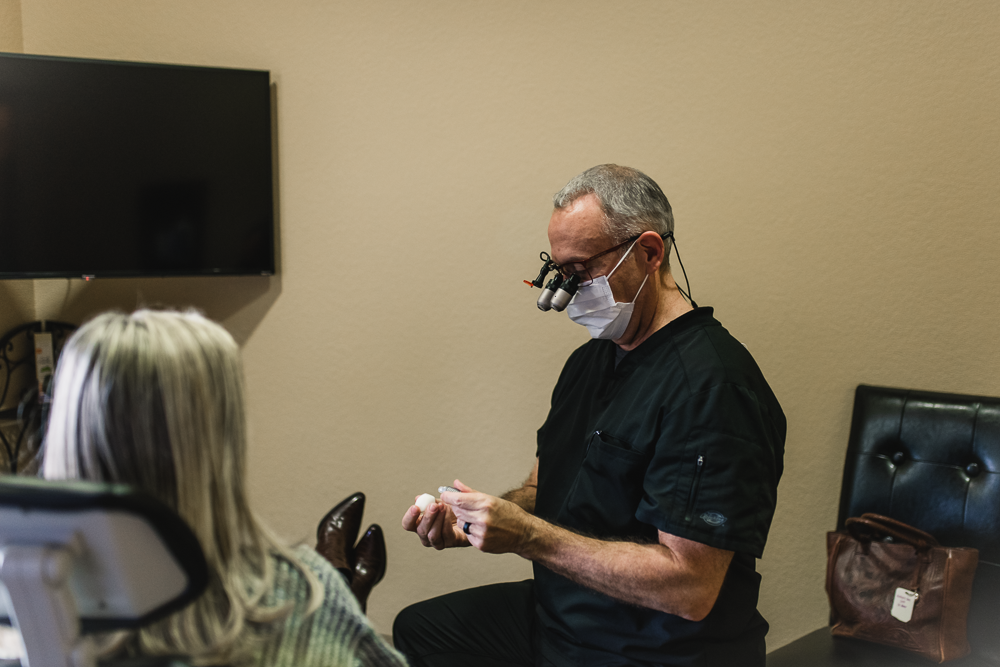
At Complete Dentistry in Trophy Club, Dr. David Crumpton has been handling exactly these situations for nearly 30 years. He trained at the Kois Center, built his CEREC proficiency to the point that the manufacturer brought him on to train other dentists, and approaches emergency care the same way he approaches everything: with a clear assessment of what is actually happening and a plan to fix it in as few steps as possible. Our emergency dentistry services are available to get you seen quickly, because a chipped tooth rarely improves on its own.
What Happens to a Tooth When It Chips?
A tooth is made up of layers. The outer enamel is the hardest material in the body, but it is also brittle under sudden impact. A fracture through that outer shell exposes the dentin beneath, a softer, porous layer connected to the nerve.
Small chips that stay within the enamel layer may cause nothing more than a rough edge. Deeper chips that reach dentin create sensitivity to temperature and pressure. The deepest fractures, those that reach the pulp, where the nerve lives, cause persistent pain and may require more involved treatment. According to a 2024 review published in PMC drawing on epidemiological studies, dental trauma is common across all age groups, with research indicating that 20 to 25 percent of school-age children experience it at some point.
The size and depth of the chip determine everything about what happens next. That is why getting it assessed quickly matters, even when the chip seems minor.
What to Do Right Away
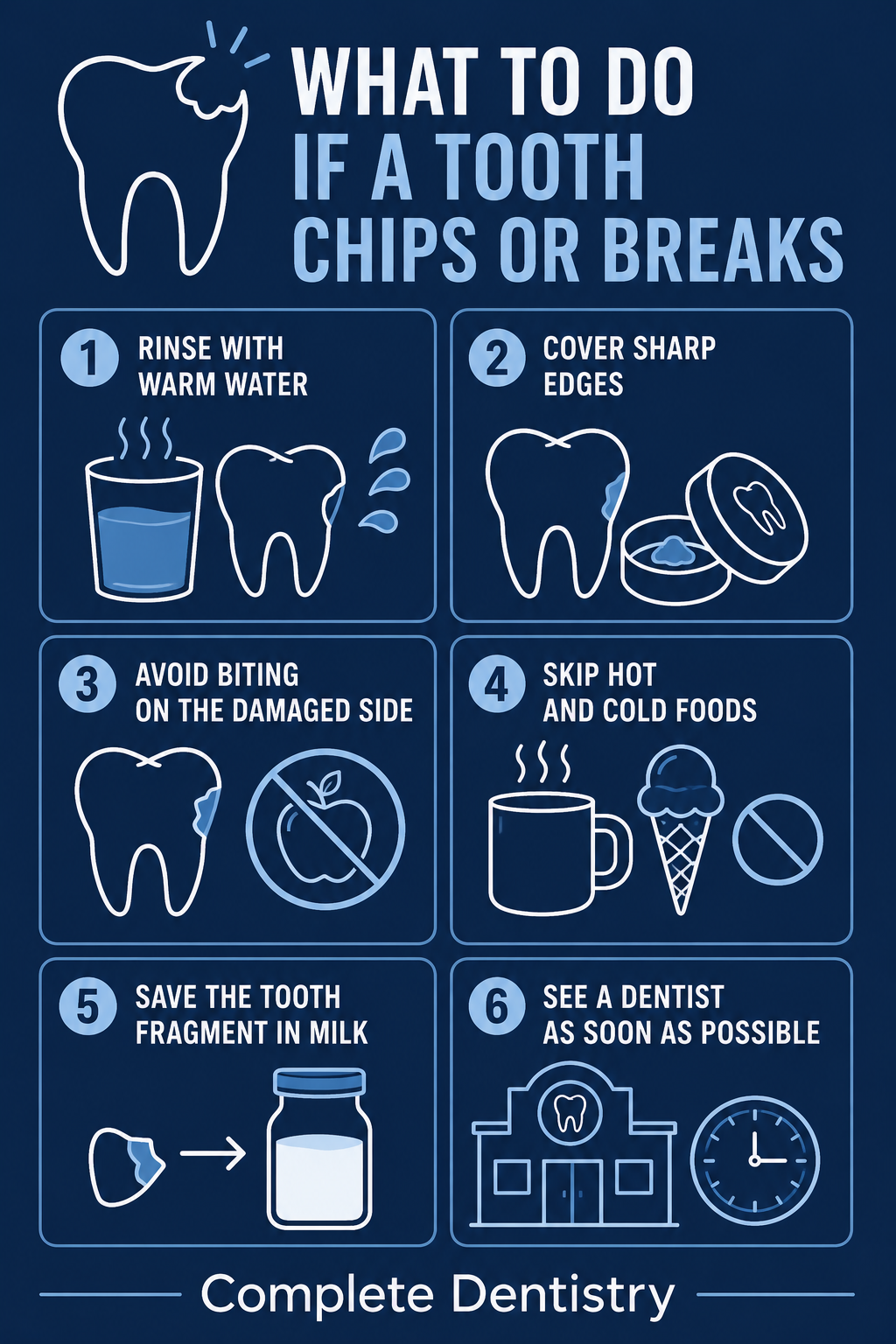
If you chip a tooth and cannot get to an office immediately, a few steps can reduce the risk of things getting worse. Rinse your mouth gently with warm water to clear any debris. If the broken edge is sharp enough to cut your tongue or cheek, a small piece of dental wax from a pharmacy can temporarily cover it. Avoid biting down on the affected side, and hold off on very hot or very cold foods until you have been seen, because temperature sensitivity through exposed dentin can be significant.
In some cases, particularly with a clean break, a dentist may be able to bond the original fragment back onto the tooth. If you find the piece, keep it moist in a small container of milk or saliva and bring it to your appointment. This does not work in every situation, but it is worth attempting when the fragment is intact and handled carefully.
How a Chipped Tooth Gets Repaired
The right repair depends entirely on how much tooth structure is involved and where in the mouth the chip occurred.
For chips that stay within the enamel, smoothing and polishing the edge is sometimes all that is needed. For chips that affect the visible surface of a front tooth, composite bonding is the most common approach: a tooth-colored resin applied to the damaged area, shaped to match the original contour, and hardened with a curing light in a single visit. When a larger portion of the tooth is gone, or a chip affects a back tooth that bears heavy chewing forces, a crown offers stronger long-term protection.
Our in-office CEREC technology allows us to design and mill same-day porcelain crowns, which means patients do not have to leave with a temporary and come back weeks later for the permanent restoration. Some chip categories worth understanding include the following:
- Enamel-only chips: smoothing or bonding in one visit
- Chips reaching dentin: bonding or a crown, depending on size and location
- Chips near or into the pulp: possible root canal treatment before any crown
- Fractures extending below the gumline: evaluation for extraction and tooth replacement
The category your chip falls into can only be determined by an exam and, in most cases, an X-ray. A chip that looks minor from the outside may conceal a deeper crack underneath.
Why Timing Matters More Than Most People Think
Leaving a chipped tooth unaddressed creates compounding problems. The rough edge wears unevenly against the opposing teeth. The nerve becomes more reactive to temperature as dentin exposure continues. Bacteria colonize the irregular surface faster than intact enamel, which accelerates decay.
A fracture that was straightforward to repair in early summer may require more extensive intervention by fall. Dr. Crumpton’s team makes it a priority to get emergency cases in quickly because the earlier a chipped tooth is treated, the more options remain on the table.
Chipped a Tooth? Restore Your Smile at Complete Dentistry Today
Dr. David Crumpton’s nearly three decades of hands-on experience in Trophy Club, combined with his training at the Kois Center and his role as a certified CEREC trainer, mean that patients who come to Complete Dentistry with a chipped tooth receive a thorough assessment and a clear treatment plan. We offer same-day crown fabrication, composite bonding, and a full range of restorative options to handle whatever the summer throws at your teeth.
If you have chipped a tooth and are not sure what to do next, do not wait to find out whether it gets better on its own. Reach out through our contact form, and we will get you in as soon as possible.