Teeth whitening is one of the most requested cosmetic treatments in the country, and yet a remarkable number of people have tried it and walked away unimpressed. Products promising brighter smiles line pharmacy shelves from end to end, but outcomes vary sharply depending on concentration, delivery method, and individual tooth structure. If your last attempt left you wanting more, the explanation usually comes down to one of three things.
At Complete Dentistry in Trophy Club, Dr. David Crumpton has helped patients sort through these options for nearly 30 years. He trained at the Kois Center and developed enough CEREC proficiency that the manufacturer brought him on to train other dentists, giving him a materials-level understanding of how enamel actually responds to bleaching chemistry. Our whitening services start with that same honest assessment of what your specific teeth can realistically achieve.
What Actually Drives Whitening Results
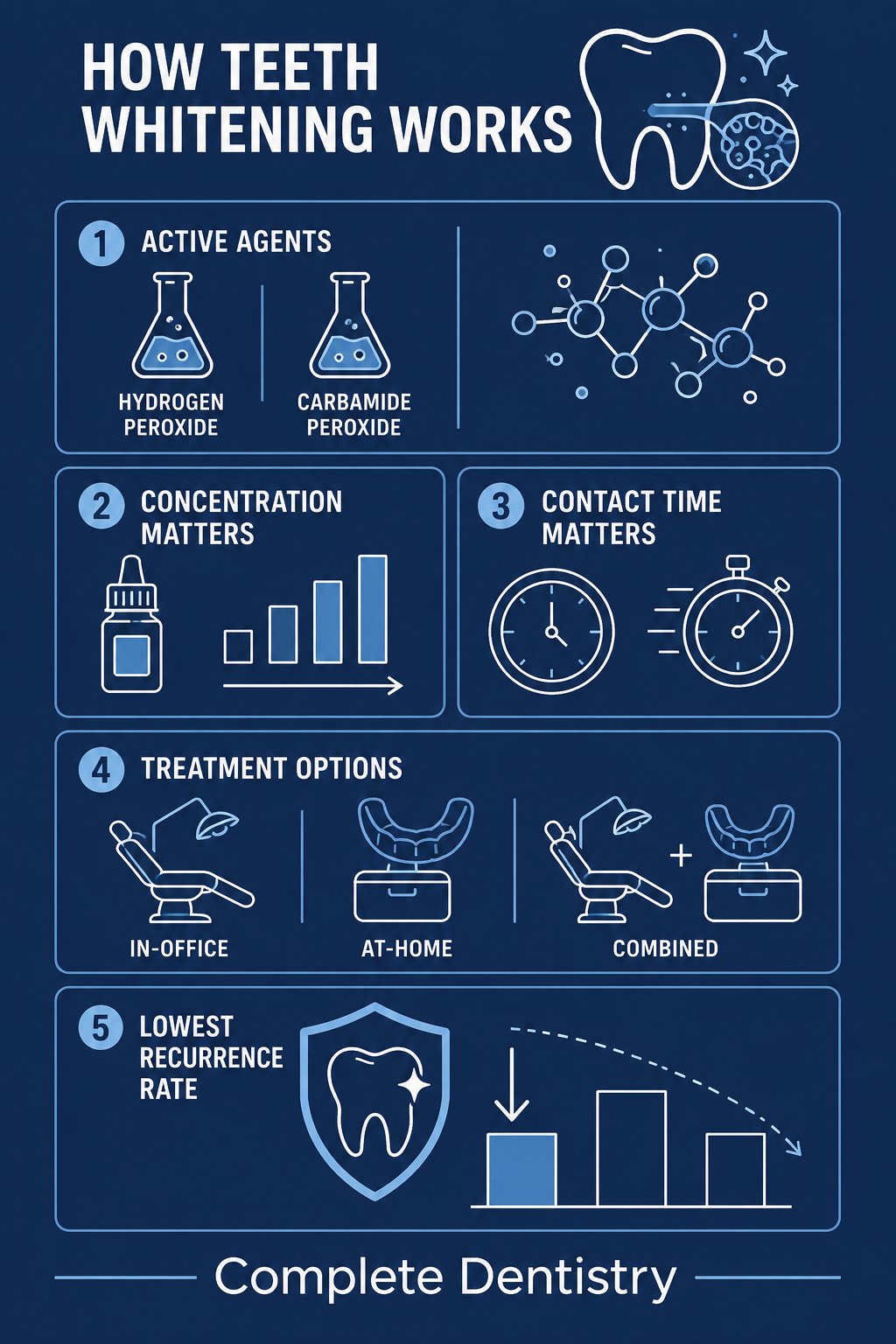
Bleaching works by exposing peroxide-based agents to the stained molecules embedded in enamel and dentin. Hydrogen peroxide and carbamide peroxide are the two active forms, and both break apart the organic pigment compounds responsible for discoloration. Two factors decide how much change occurs: the concentration of the agent used and how long it stays in meaningful contact with the tooth surface.
A 2024 systematic review in Bioengineering, covering 30 clinical articles, found that in-office, at-home, and combined protocols all produced measurable color change, with in-office treatment showing a lower recurrence rate over time. The chemistry works. What varies is how well the delivery system actually puts it to work on your specific teeth.
Why Over-the-Counter Products Often Fall Short
There are two mechanical reasons most pharmacy whitening products underdeliver, and they have nothing to do with how closely you follow the instructions.
The Concentration Gap
Regulatory limits cap the peroxide concentration in products sold without a prescription. In-office treatments use concentrations well above those caps and are applied alongside soft-tissue barriers specifically designed to protect the gums during the session, not the generic plastic tray that ships with an over-the-counter box. For anyone with moderate or deep staining, this ceiling means the bleaching agent never reaches enough of the discoloration to produce a noticeable result.
Fit and Contact Time Matter More Than People Realize
A generic drugstore tray was never shaped to fit your teeth. Bleaching gel migrates away from the enamel surface instead of staying pressed against it, contact time shortens, and the results come out uneven. Custom-fitted trays, molded from an impression of your actual dentition, eliminate that problem. That single mechanical difference accounts for much of the gap between store-bought outcomes and what professional at-home whitening options can produce.
The Stain Type Determines Which Approach Works
Extrinsic discoloration sits on or just inside the enamel surface and builds gradually from food, beverages, and tobacco. These stains are the direct target of peroxide bleaching and respond reliably. Intrinsic discoloration has a different origin: it forms within the tooth structure itself, often from tetracycline exposure during development or from trauma that triggers internal bleeding within the pulp chamber. Peroxide chemistry cannot reach it. For these cases, dental veneers or composite bonding change the visible color through a different mechanism entirely.
Knowing which type is present before starting any treatment changes everything about what to expect. Some of the most common sources of extrinsic, bleachable staining include:
- Years of daily coffee or tea
- Red wine and dark-pigmented juices
- Tobacco, smoked or smokeless
- Surface accumulation from certain medications
- Gradual yellowing as enamel wears thinner with age
A quick exam is enough to separate surface staining from structural discoloration, and that distinction shapes every decision that follows.
How to Maintain Results After Whitening
Whitening results are not permanent, but they hold significantly longer when a few habits stay consistent. Cutting back on the primary staining sources slows re-accumulation at the enamel surface. Rinsing with water right after coffee or wine dilutes the pigment before it binds. Scheduled teeth-cleaning appointments remove surface buildup and tartar that make enamel look duller between whitening sessions. Periodic touch-up applications, which take far less time than the original treatment, can push professional results out by a year or more.
Patients who schedule a professional cleaning before whitening consistently get better baseline results because fresh, clean enamel takes bleaching agents more evenly. At Complete Dentistry, we coordinate gum disease treatment or a deep cleaning first when patients need it, because the condition of the surrounding tissue affects how the enamel responds.
Choose Complete Dentistry for Your Smile Goals
Dr. David Crumpton brings nearly three decades of hands-on experience to every cosmetic consultation at Complete Dentistry in Trophy Club. His background in advanced dental techniques, including training at the Kois Center and certification as a Gold Provider of Invisalign, reflects a commitment to staying current with the science of smile improvement. We offer in-office whitening, custom take-home trays, and honest guidance on whether whitening is the right first step or whether your goals would be better served by a smile makeover that combines multiple treatments.
If you are ready to understand your whitening options and get a plan that fits your teeth, your timeline, and your goals, we would love to hear from you. Reach out through our contact form to schedule a consultation with Dr. Crumpton.