
Dental Implants
in Trophy Club, TX
Missing even a single tooth can impact far more than your confidence. Beyond the visible gap in your smile, tooth loss triggers a cascade of oral health concerns, including nutritional deficiencies, jawbone deterioration, and teeth shifting out of position.
Missing teeth create problems that extend far beyond appearance. Gaps in your smile make eating difficult and speaking clearly challenging. Surrounding teeth gradually shift into empty spaces, creating alignment problems and bite issues. Your jawbone begins deteriorating without tooth roots to stimulate it, changing your facial structure and making future tooth replacement more complex.
Our restorative dentistry services at Complete Dentistry include comprehensive dental implant treatment that replaces missing teeth with permanent solutions functioning like natural teeth. Dr. David Crumpton has completed advanced training at the Pikos Institute and Lamar Dental Implant Training, learning sophisticated placement techniques and complex case management. His nearly 30 years of experience in Trophy Club means you receive implant care guided by both extensive education and thousands of successfully completed cases.

How Dental Implants Work
Dental implants replace the entire tooth structure from root to crown. A titanium post surgically placed into your jawbone acts as an artificial tooth root. The biocompatible metal integrates with your bone through a process called osseointegration, creating a foundation as stable as a natural tooth root. An abutment connects to the top of the implant post, extending through your gum tissue. A custom crown attaches to the abutment, completing your restoration.
This three-part system provides stability no other tooth replacement option can match. According to the National Library of Medicine, dental implants have a success rate of 95%. The titanium post prevents bone loss by providing the stimulation your jawbone needs to maintain its volume. Your replacement tooth looks natural, functions normally, and can last a lifetime with proper care.
Single Tooth Replacement
Single tooth implants replace individual missing teeth without affecting adjacent healthy teeth. Traditional bridges require grinding down neighboring teeth to support the restoration. Implants eliminate this sacrifice, preserving your natural tooth structure. The implant-supported crown stands independently, creating no extra cleaning challenges or stress on surrounding teeth.
The placement process begins with thorough evaluation including 3D imaging. These scans reveal your bone quality, quantity, and the position of vital structures like nerves and sinuses. Dr. Crumpton uses this information to plan optimal implant position and angulation. During surgery, he creates a precise opening in your bone and places the implant post. The surgical site heals over several months while the implant integrates with your bone.
After integration completes, you return for abutment placement and crown fabrication. We take impressions or digital scans of the implant and surrounding teeth. These records guide creation of your custom crown designed to match your natural teeth perfectly. The final crown attaches to the abutment, completing your restoration with results that look and feel completely natural.
Multiple Tooth Replacement
Missing several adjacent teeth creates significant functional and aesthetic challenges. Multiple individual implants can replace each missing tooth, though this approach increases treatment complexity and cost. Implant-supported bridges offer an efficient alternative. Two or more implants support a bridge spanning the gap, replacing multiple teeth with fewer implant posts.
The number of implants needed depends on the length of the span and the location in your mouth. Front teeth experience lighter chewing forces and may need fewer supporting implants. Back teeth endure heavy grinding pressure and typically require more support. Dr. Crumpton evaluates your specific situation, recommending the implant configuration that balances success rates with treatment efficiency.
Full Arch Replacement
According to the American College of Prosthodontics, approximately 40 million Americans are missing all of their teeth. Implant-supported dentures transform the denture-wearing experience by attaching your prosthetic to dental implants rather than relying on suction or adhesive. This approach eliminates the slipping, clicking, and dietary restrictions associated with traditional dentures.
Full arch replacement using implants comes in several forms. Removable implant dentures snap onto implants but can be removed for cleaning. Fixed implant bridges attach permanently to implants and never come out except during professional maintenance. Our All-on-X dental implants in Trophy Club place a full arch of teeth on just four to six strategically positioned implants, often allowing you to leave surgery with temporary teeth the same day.
The Importance of
Experience
Implant placement requires precision, judgment, and problem-solving ability refined through extensive practice. Proper positioning determines whether your final restoration functions optimally and lasts decades. Angulation matters tremendously. An implant placed at the wrong angle creates challenges for crown fabrication and may place excessive stress on the restoration. Depth affects both crown aesthetics and long-term bone stability.
Dr. Crumpton’s training through the Pikos Institute and Lamar Dental Implant Training programs taught advanced techniques for complex cases. He learned how to manage insufficient bone through grafting procedures, how to navigate around anatomical structures safely, including sinus lift procedures, and how to handle complications when they arise. His nearly 30 years of applying these skills means you benefit from someone who has encountered and successfully managed virtually every implant scenario.
Failed implants represent a growing challenge in dentistry as inexperienced practitioners attempt procedures beyond their skill level. We regularly help patients who received inadequate implant treatment elsewhere, removing failed implants and replacing them with properly placed alternatives. This corrective work proves more complex than initial placement, often requiring extensive bone grafting to repair damage from the failed implant. Choosing an experienced implant dentist from the start avoids these problems and their associated costs.
Maintaining Your Dental Implants
Implants require the same diligent care as natural teeth. Brush twice daily and floss carefully around implant crowns. The implant itself can’t develop cavities, but the gum tissue surrounding it remains vulnerable to infection. Bacteria accumulating around implants causes peri-implantitis, an inflammatory condition that destroys the bone supporting your implant. Left untreated, peri-implantitis leads to implant failure.
Regular dental cleanings every six months allow us to monitor your implants and remove buildup you might miss at home. We check the stability of your implant, examine the surrounding gum tissue for signs of inflammation, and verify your crown remains securely attached. Early detection of problems allows simple interventions before major complications develop. Most implant failures occur due to inadequate maintenance rather than surgical problems.

Comprehensive Implant Care at Complete Dentistry
Dr. Crumpton has proudly served Trophy Club and surrounding communities for nearly 30 years, placing thousands of dental implants that restore function and confidence. He handles every phase of implant treatment in-house — from surgical placement and bone grafting through final crown delivery — so your care is fully coordinated under one experienced provider from start to finish. He completes two to three times the continuing education required by the state, with advanced training at the Pikos Institute, Lamar Dental Implant Training, and the Kois Center, ensuring his techniques reflect current best practices.
Dental implants are a significant investment, and we want to make sure cost is never the reason you delay treatment. Complete Dentistry is in-network with Cigna, Humana, United Healthcare, BCBS, and Careington, and our team will verify your benefits before treatment begins. For any remaining balance, we offer flexible financing options through Proceed Finance (loans spanning 2–8 years), CareCredit (6-month interest-free and extended 24–60 month plans), and Sunbit. Contact us today to schedule your consultation with Dr. Crumpton and discover how dental implants can restore your smile, function, and confidence in Trophy Club, TX.
Frequently Asked Questions About Dental Implants
How much do dental implants cost in Trophy Club, TX?
Dental implant costs vary based on the number of implants needed, whether bone grafting is required, and the type of restoration placed on top. During your complimentary implant consultation at Complete Dentistry, Dr. Crumpton will provide a detailed cost estimate tailored to your specific treatment plan. We are in-network with many popular dental insurance plans and offer financing through Proceed Finance, CareCredit, and Sunbit to help make implants affordable.
Am I a candidate for dental implants?
Most adults with missing teeth are candidates for dental implants. Ideal candidates have adequate jawbone density to support the titanium implant post, healthy gums, and good overall health. If you have experienced bone loss, Dr. Crumpton can evaluate whether bone grafting may allow you to receive implants. Conditions like uncontrolled diabetes or heavy smoking may affect healing, so a thorough evaluation is the first step. Schedule a complimentary consultation at our Trophy Club office to find out if implants are right for you.
How long does the dental implant process take?
The dental implant process typically takes three to six months from placement to final restoration. After the titanium post is surgically placed into your jawbone, a healing period of several months allows the implant to fuse with the bone through a process called osseointegration. Once integration is complete, Dr. Crumpton attaches a custom abutment and crown to complete your restoration. Some patients may require preliminary procedures like bone grafting, which can extend the overall timeline.
Are dental implants painful?
Most patients report that dental implant placement is more comfortable than they expected. Dr. Crumpton uses local anesthesia during the procedure, and sedation options are available for patients who feel anxious. After surgery, mild soreness and swelling are common and can usually be managed with over-the-counter pain medication. Many patients return to normal activities within a day or two.
How long do dental implants last?
With proper care, dental implants can last a lifetime. The titanium post that serves as the tooth root is designed to be a permanent solution, and studies show a success rate of approximately 95 percent. The crown attached to the implant may need replacement after 10 to 15 years due to normal wear, but the implant itself remains securely fused with your jawbone. Regular brushing, flossing, and dental checkups at Complete Dentistry help maintain your implant long-term.
What is the difference between dental implants and dentures?
Dental implants are permanently anchored in your jawbone with a titanium post, providing stability and function that closely mimics natural teeth. They also prevent bone loss by stimulating the jawbone. Traditional dentures rest on top of your gums and rely on suction or adhesive to stay in place, which can lead to slipping and dietary restrictions. Complete Dentistry also offers implant-supported dentures, which combine the security of implants with a full-arch prosthetic for patients missing all or most of their teeth.
Does dental insurance cover implants?
Many dental insurance plans now offer partial coverage for dental implants, though the amount varies by provider and plan. Complete Dentistry is in-network with Cigna, Humana, United Healthcare, BCBS, and Careington, and our team will help verify your benefits before treatment begins. For any remaining balance, we offer financing through Proceed Finance, CareCredit, and Sunbit, as well as our True Blue Membership Plan for patients without insurance.
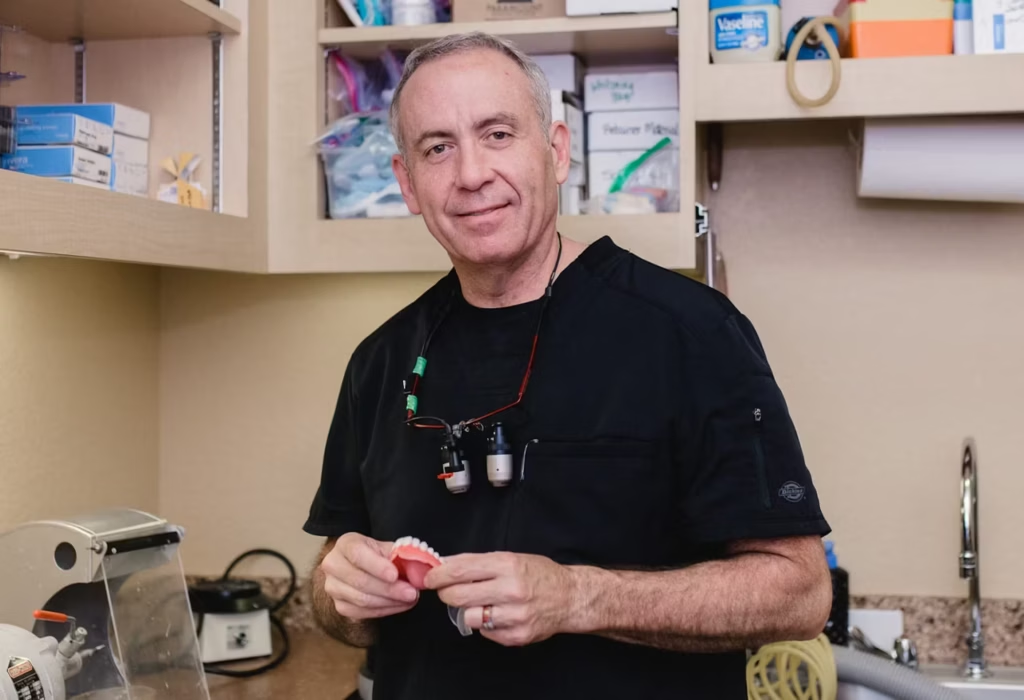
Meet Dr. David Crumpton
Dr. David Crumpton has been one of Trophy Club’s most trusted dentists for nearly three decades. A graduate of Baylor College of Dentistry, Dr. Crumpton is known for his commitment to advanced training, compassionate care, and comprehensive dentistry that covers everything from routine cleanings to full-mouth restorations and dental implants. He is a certified Gold Provider of Invisalign and has trained at nationally recognized institutions, including the Kois Center and the Pikos Institute. His philosophy is simple: listen first, then create a personalized plan that helps each patient achieve the smile they deserve.
Insurance & Financing
We make quality dental care affordable with flexible payment options.
Dental Insurance
We are in-network with many of the most popular PPO dental insurance plans, including Cigna, Humana, United Healthcare, BCBS, and Careington. We also welcome patients with Delta Dental PPO, Aetna, and most other PPO plans — even if we’re not a listed preferred provider. Our office files claims on your behalf and provides a complimentary benefits check before treatment.
Flexible Financing
We offer flexible financing through CareCredit, Proceed Finance, and Sunbit, allowing you to break down treatment costs into manageable monthly payments that fit your budget. We also accept FSA, HSA, cash, check, and all major credit cards.
Questions? Call us at 817-491-3355 to discuss your insurance coverage or financing options.
Visit Complete Dentistry In Trophy Club
We’re located at 301 Trophy Branch Drive, Suite 100, Trophy Club, TX 76262, right off the service road of Highway 114 in the heart of Trophy Club. Dr. David Crumpton has been caring for families throughout Trophy Club, Westlake, Flower Mound, Roanoke, Keller, and Southlake for nearly 30 years.
Ample parking is available. New patients are always welcome, and same-week appointments are often available. You can also book online anytime.
You can find us near The Trophy Table, Leela’s Wine Bar, and HG Sply Co. If you have any trouble locating us, just give us a call and we’ll help you find us.
Contact
- 301 Trophy Branch Drive, Suite 100, Trophy Club, TX 76262
- (817) 491-3355
- Monday–Thursday: 8 AM–5 PM